

The mind and body are deeply connected. What we experience emotionally can affect us physically, often in ways we do not immediately notice.
Many people have felt it before: a nervous stomach before an important event, loss of appetite during stressful times, or digestive problems during periods of worry. These reactions are not imaginary. Anxiety can affect the intestines because the brain and gut constantly communicate with each other.
Modern science calls this the gut-brain connection. Simply put, our emotions can influence our digestion, and our digestive health can also influence our emotions.
The Connection Between Stress and Digestion
Most people have experienced the connection between emotions and the stomach:
- Feeling nervous before an interview
- Losing appetite during sadness or grief
- Experiencing stomach discomfort during financial stress
- Feeling urgency before an important meeting
These reactions happen because the body responds to emotional pressure.
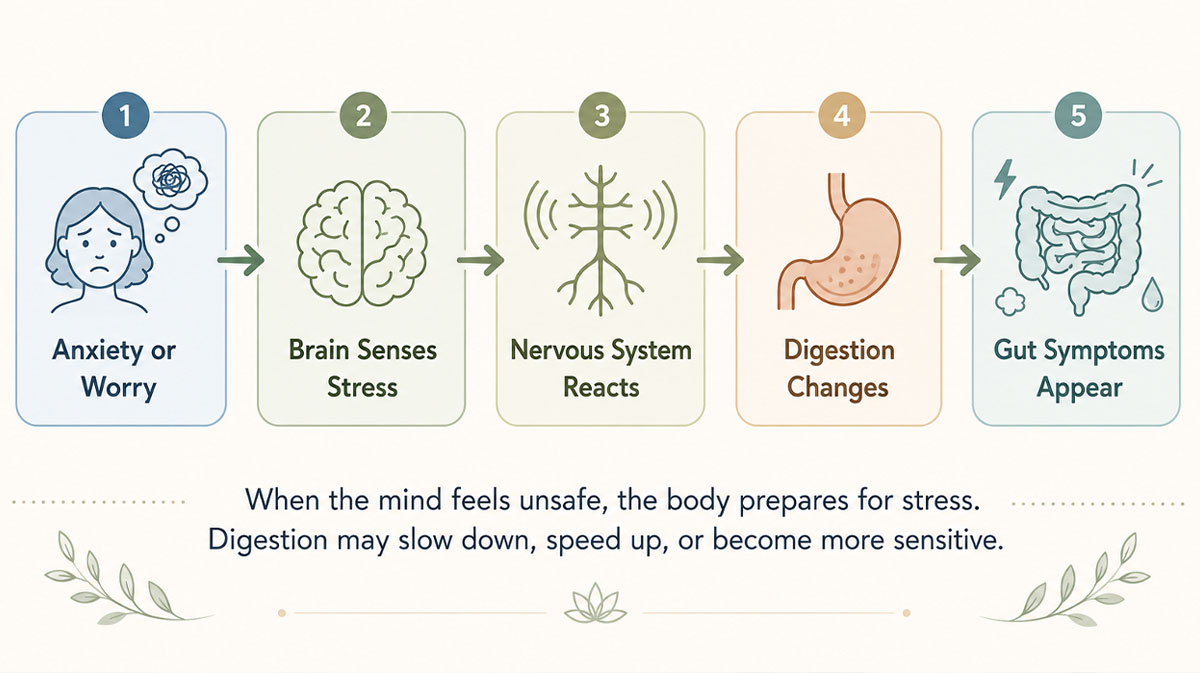
When the mind senses stress or danger, the body prepares itself to respond. This is helpful during true emergencies, but when anxiety becomes constant, the body may remain in a state of tension.
Over time, this can affect digestion and intestinal comfort.
How Anxiety Can Affect the Intestines
Anxiety can affect people differently. Some may experience:
- Bloating
- Gas
- Stomach cramps
- Nausea
- Constipation
- Loose stools
- Changes in appetite
For some people, stress speeds up digestion. For others, it slows it down.
A person may think a certain food caused discomfort, but sometimes the bigger factor is ongoing stress, poor sleep, emotional pressure, or an unhealthy routine.
The intestines are not simply reacting to food. They are also responding to the overall condition of the body and mind.
The Cycle of Anxiety and Gut Problems
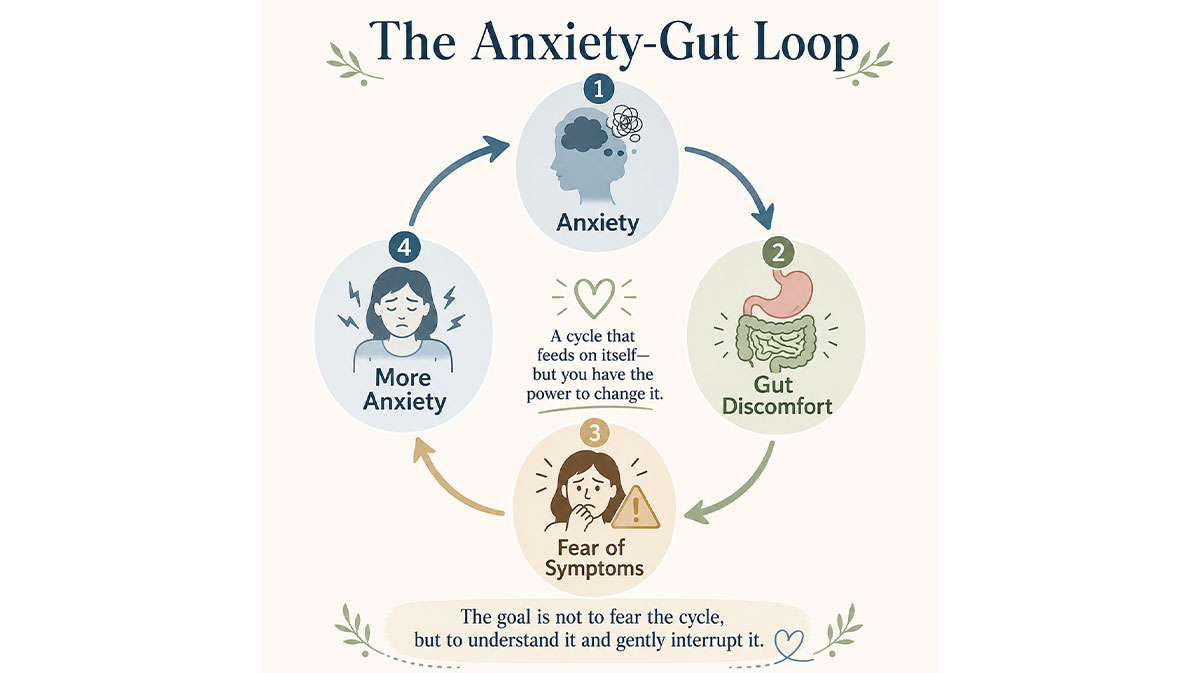
One of the hardest parts of anxiety-related digestive problems is that they can create a cycle.
Anxiety affects the gut.
The gut creates discomfort.
The discomfort creates more anxiety.
A person may begin worrying about symptoms, avoiding certain foods, avoiding travel, or constantly thinking about where the nearest restroom is.
Conditions like irritable bowel syndrome (IBS) show how closely connected stress and digestion can be. IBS is a real physical condition, but stress and anxiety can often make symptoms worse.
The solution is not to dismiss the symptoms as “just stress.” The discomfort is real. But understanding the connection between emotions and the body can help people find better ways to manage it.
Positive Thinking Helps the Body
A positive attitude does not mean ignoring problems or pretending everything is perfect.
True positivity means learning how to face challenges without allowing fear to control every moment.
When a person understands that anxiety can affect the body, they may begin responding with awareness instead of panic.
Instead of thinking:
“Something is terribly wrong every time I feel discomfort,”
they may begin asking:
“Is my body reacting to stress, lack of sleep, or emotional pressure?”
Awareness creates control.
Inner Peace Supports Healing
Inner harmony is powerful because the body functions better when it feels calm and balanced.
Simple habits can support both mental and digestive health:
- Eating meals slowly and mindfully
- Getting enough sleep
- Reducing unnecessary stress
- Taking walks
- Practicing meditation, prayer, or quiet reflection
- Maintaining healthy routines
Small changes repeated consistently can create positive results.
The goal is not perfection. The goal is balance.

Faith, Trust, and Emotional Strength
For many people, faith provides comfort during difficult times.
Whether through prayer, meditation, spiritual reflection, or personal belief, faith can help calm the mind and reduce feelings of fear and uncertainty.
Life brings challenges that we cannot always control. Learning to trust, remain patient, and maintain inner strength can create emotional stability.
A peaceful mind does not remove every problem, but it can help us handle problems with greater clarity.
Balance Between Mind, Body, and Medical Care
While anxiety can affect digestion, not every intestinal issue should be blamed on stress.
It is important to seek medical advice for serious or ongoing symptoms, especially if there are warning signs such as:
- Blood in stool
- Unexplained weight loss
- Severe or persistent pain
- Fever
- Ongoing vomiting
- Symptoms that interrupt sleep
Good health comes from combining awareness, healthy habits, emotional balance, and proper medical care.
Conclusion
Anxiety affects the intestines because the mind and body are connected. Stress can influence digestion, change bowel patterns, and create physical discomfort.
But this connection also gives hope.
If stress can affect the body negatively, peace and balance can support the body positively.
Taking care of your thoughts, emotions, and mental well-being is an important part of taking care of your physical health.
The intestines may process food, but they also respond to the story happening inside the mind. When the mind becomes calmer, the body receives a message of safety, relaxation, and healing.
About Sridhar “Sri” Rangaswamy
Sri is an author, technologist, comedian, and motivational speaker with decades of experience in technology, leadership, entertainment, and community service. Through storytelling, humor, and real-life experiences, Sri inspires audiences to learn, grow, and make a positive impact.
Bring Inspiration, Leadership & Laughter to Your Organization
Whether you’re planning an event, looking for a motivational speaker, or exploring business opportunities, Sri brings decades of experience, engaging storytelling, and a unique perspective to every audience.