There are some spiritual stories that remain alive not only because they are sacred, but because they carry a message the world still needs.
The story of Swami Ramanuja sharing the sacred mantra with everyone is one such story. It is remembered in Sri Vaishnava tradition as an act of courage, compassion, and deep spiritual love. At its heart, this story asks a powerful question: What is the purpose of divine wisdom if it cannot help people? “If I alone go to hell, it does not matter. Let everyone else be saved.” – Traditionally attributed to Swami Ramanuja in the Tirukoshtiyur mantra story
Swami Ramanuja, also known as Ramanujacharya, is one of the most respected acharyas in Indian spiritual history. He is closely associated with Vishishtadvaita Vedanta, a devotional philosophical tradition that gives great importance to Lord Narayana, surrender, service, and loving devotion. His life is remembered not only for philosophy, but also for making devotion more accessible and meaningful to sincere seekers.
This is why the story of the secret mantra matters even today. It is not only about a mantra. It is about the responsibility that comes with spiritual knowledge.
Who Was Swami Ramanuja?
Swami Ramanuja was a great teacher, philosopher, and spiritual guide in the Sri Vaishnava tradition. He is widely remembered for explaining Vishishtadvaita, often understood as “qualified non-dualism,” and for giving a deeply devotional interpretation of Vedanta. In simple terms, his teachings helped people understand the relationship between the individual soul, the universe, and the Supreme Divine.
But Ramanuja was not only an intellectual figure. He was also a compassionate teacher. His life showed that spirituality should not remain limited to debate, learning, or personal achievement. True knowledge should soften the heart and serve others.
This is where Ramanuja’s example becomes very important. He did not treat divine wisdom as personal property. He saw it as something that could uplift people.
The Journey to Receive the Sacred Mantra
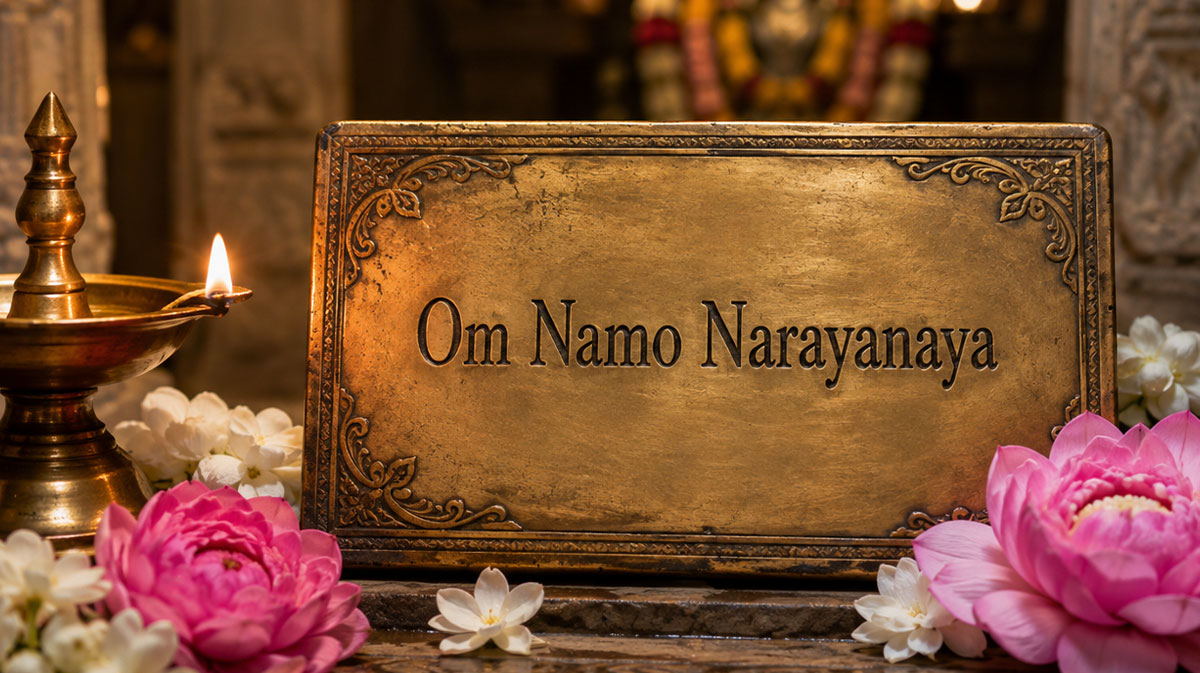
According to Sri Vaishnava tradition, Ramanuja wanted to receive the sacred Ashtakshara mantra, “Om Namo Narayanaya,” from his teacher, Thirukoshtiyur Nambi. The mantra is deeply honoured in Vaishnava devotion and is associated with surrender to Lord Narayana.
The story says that Ramanuja did not receive it immediately. He had to make repeated journeys to meet his teacher. In many retellings, it is said that he travelled eighteen times before he was finally considered ready and humble enough to receive the mantra and its meaning.
Spiritual knowledge requires patience. It requires humility. It requires the willingness to wait, learn, and purify one’s intention. Ramanuja did not approach the mantra as a shortcut. He approached it with devotion and discipline.
For today’s readers, this part of the story is very practical. People often want quick answers, quick success, quick peace, and quick spiritual results. But Ramanuja’s repeated journeys remind us that anything sacred must be approached with sincerity.
The Secret That Could Not Remain Secret
After receiving the mantra, tradition says Ramanuja was instructed to keep it secret and share it only with those considered qualified. In that setting, the mantra was treated as a sacred teaching to be guarded carefully.
But Ramanuja’s heart was moved by compassion.
Instead of keeping it only for himself, he is said to have climbed the temple tower at Tirukoshtiyur and called people to listen. He then shared the mantra publicly so that everyone could receive its spiritual benefit.
His teacher was displeased because Ramanuja had disobeyed the instruction of secrecy. In many retellings, the teacher warned that Ramanuja could face spiritual consequences for revealing what had been given privately. Ramanuja’s response is remembered as the heart of the story: if many people could be uplifted by hearing the mantra, he was willing to bear the consequence himself.
Compassion Above Personal Safety
The most powerful part of this story is not that Ramanuja broke a rule. The deeper meaning is why he did it.
He did not share the mantra to show that he was greater than his teacher. He did not do it to gain followers. He did it because he could not bear the thought that divine grace should remain unavailable to sincere people.
- Pride says, “I know something others do not know.”
- Compassion says, “If this can help others, how can I keep it only for myself?”
Ramanuja’s action teaches that spiritual wisdom becomes higher when it becomes service. Knowledge kept only for status can create distance. Knowledge shared with humility can create liberation, hope, and devotion.
This is a lesson for every generation. Whether it is spiritual teaching, education, professional knowledge, or life experience, what we know should not only make us proud. It should make us useful.
The Meaning of Sharing Divine Wisdom
Sharing divine wisdom does not mean treating sacred things casually. It does not mean removing respect, discipline, or tradition. Ramanuja’s own journey shows that he valued the guru, the mantra, and the seriousness of spiritual preparation.
But his life also shows that sacred knowledge should not become a wall between people and God.
The purpose of spiritual teaching is to bring the soul closer to the Divine. If people are suffering, confused, fearful, or spiritually hungry, wisdom should guide them. It should not become a possession locked away by ego.
This message is especially meaningful in today’s world. Many people feel distant from religion because they think spirituality belongs only to scholars, priests, monks, or highly learned people. Ramanuja’s story reminds them that sincere devotion matters. The Divine is not limited by social status, education, language, or background.
A simple heart can also call upon God.
A Lesson Beyond Caste, Status, and Learning
Ramanuja’s story is often remembered as a message of spiritual inclusiveness. It should be handled with care, but the essence is clear: divine grace should not be treated as the privilege of a few.
Human society often creates divisions. People may divide themselves by birth, wealth, education, profession, language, region, or status. But true devotion looks deeper. It asks whether the heart is sincere. It asks whether the person longs for God. It asks whether faith is alive.
Ramanuja’s example teaches that spirituality reaches its highest form when it uplifts everyone. A person may be learned or unlearned, rich or poor, socially known or completely ordinary. If there is sincerity, the path to God should not be closed.
This is why his message continues to touch people. It carries both devotion and dignity.
What Swami Ramanuja Teaches Us Today
Ramanuja’s story is not only for temples or religious study. It gives lessons for daily life.
If you have knowledge, share it with humility. If you have experience, use it to guide someone. If you have faith, do not use it to feel superior. Use it to comfort others. If you have received blessings, let those blessings move through you into service.
Parents can share values with children. Teachers can share learning with students. Professionals can mentor younger people. Spiritual seekers can encourage those who are losing faith. Community members can make others feel included rather than judged.
This is how divine wisdom becomes living wisdom.
Ramanuja teaches that the highest knowledge is not the one that stays hidden in the mind. It is the one that becomes compassion in action.
Conclusion: Wisdom Becomes Greater When Shared
Swami Ramanuja’s life reminds us that courage and compassion can belong together. His decision to share the sacred mantra is remembered because it came from a heart that wanted spiritual good for all.
He had the patience to seek wisdom. He had the humility to learn from his teacher. He had the courage to act for others. And he had the compassion to accept personal consequence if it meant many souls could benefit.
In a world where knowledge is often used for power, Ramanuja shows a different path. Knowledge should become service. Faith should become love. Devotion should become inclusion. Spiritual wisdom should not make the heart smaller; it should make the heart wider.
The message is simple and timeless: divine wisdom reaches its true purpose when it brings people closer to God. And when wisdom is shared with compassion, it does not become less sacred.
About Sridhar “Sri” Rangaswamy
Sri is an author, technologist, comedian, and motivational speaker with decades of experience in technology, leadership, entertainment, and community service. Through storytelling, humor, and real-life experiences, Sri inspires audiences to learn, grow, and make a positive impact.
Bring Inspiration, Leadership & Laughter to Your Organization
Whether you’re planning an event, looking for a motivational speaker, or exploring business opportunities, Sri brings decades of experience, engaging storytelling, and a unique perspective to every audience.