
Karaoke may look simple from the outside. A microphone, a screen, a song, a small stage, and a group of people waiting for their turn. Some sing beautifully. Some sing with confidence. Some miss a few notes and laugh at themselves. Some come only to listen. But when karaoke is experienced with the right spirit, it becomes more than entertainment.
As Hans Christian Andersen is often quoted as saying, “Where words fail, music speaks.” That is why karaoke can become such a natural space for connection. A song can express joy, memory, humour, and emotion in a way ordinary conversation sometimes cannot.
In a good karaoke space, people are not gathered only to judge singing. They are gathered to share joy. They clap for effort. They encourage the nervous person. They laugh kindly. They wait for their turn. They respect the host, the singers, the audience, and the atmosphere. In that sense, karaoke quietly teaches some of the most important values of life: friendship, respect, patience, boundaries, confidence, humility, and kindness.
For someone like me, whose karaoke journey grew from one song into a stage identity filled with humour and warmth, music became more than performance. It became a way to connect with people and bring smiles into everyday spaces.
Karaoke is More Than About Singing
Many people think karaoke is about singing well. That is only one part of it. At its heart, karaoke is about participation.
A professional singer may impress the room, but a sincere singer can move the room. A shy person who sings one line with courage may receive louder applause than someone who performs perfectly. Someone with a unique accent, a playful style, or a funny stage personality may become memorable not because they sound like the original singer, but because they bring their own spirit to the song.
That is the beauty of karaoke. It does not ask everyone to be perfect. It invites people to be present.
This is also why karaoke can become meaningful for immigrants, working professionals, retirees, families, and people who simply need a break from daily stress. Many people carry pressure from work, bills, family responsibilities, health concerns, loneliness, or personal struggles. When they enter a music space, even for a few hours, they may feel lighter.
A song can do what ordinary conversation sometimes cannot. It can open emotion. It can bring back memory. It can create laughter. It can make strangers clap for each other.

Music Builds Friendship Without Forcing It
Friendship does not always begin with deep conversation. Sometimes it begins with a shared song.
Someone sings an old favourite, and another person says, “I love that song too.” Someone performs a duet, and a simple musical partnership begins. Someone makes the room laugh, and people remember them the next week. Over time, familiar faces become friendly faces. Friendly faces become community.
This is one reason karaoke can build friendships naturally. It gives people a common activity without pressure. People do not have to explain their whole life story. They can simply enjoy the music, appreciate others, and slowly become part of a circle.
A well-known saying often attributed to Maya Angelou says, “People will forget what you said, people will forget what you did, but people will never forget how you made them feel.” That is exactly what happens in a good music community. People may not remember every song sung on a particular evening, but they remember who made them feel welcomed, encouraged, and included.
For me, this seems to be one of the strongest parts of the karaoke journey. It started unexpectedly, but it became a way to build musical friendships and community connections. A stage name like “Dr. Just Kidding” also adds personality. It tells people that the performance is not only about voice. It is also about humour, openness, and making the room feel alive.
Respect Is the Foundation of Every Good Community
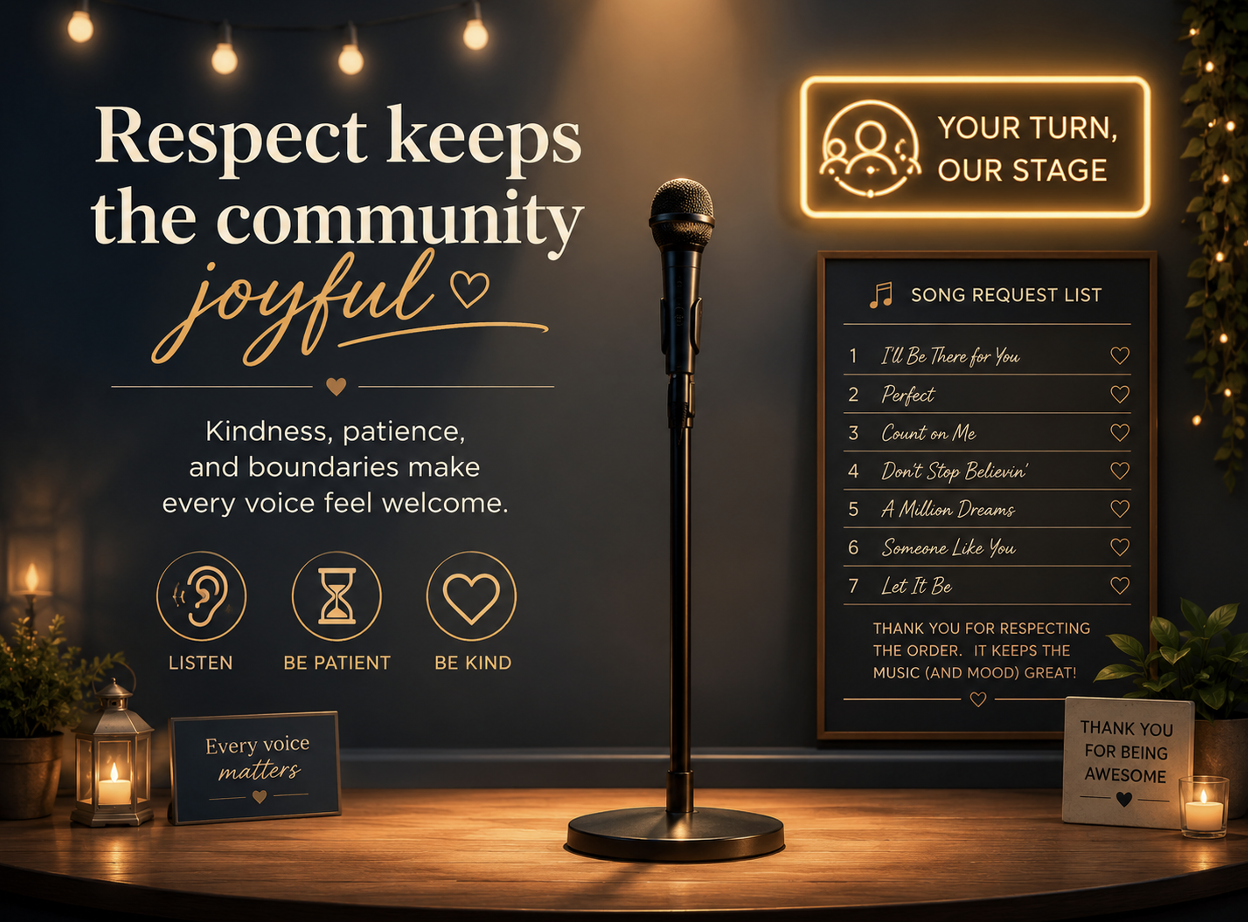
A karaoke space only stays joyful when respect is present.
Respect means listening when someone else is singing. It means not laughing at a person in a cruel way. It means not taking over the microphone all the time. It means appreciating the DJ or host who keeps the evening moving. It means understanding that every person has a different comfort level. Some people want to sing loudly. Some want to watch quietly. Some are open to jokes. Some are more private.
A good community understands these differences.
Boundaries matter because joy should never come at someone else’s discomfort. Humour is beautiful when it uplifts. It becomes harmful when it embarrasses or pressures others. Confidence is good when it encourages others. It becomes ego when it dominates the room.
This is a lesson that goes far beyond karaoke. In every community, whether at work, in family gatherings, spiritual circles, or social events, respect decides whether people feel safe. A person may be talented, funny, or popular, but if they do not respect others, the community becomes uncomfortable. On the other hand, even a simple person with kindness and humility can make a group feel peaceful.
Humour Can Bring People Closer
Humour is one of the easiest ways to break distance between people. A light joke, a funny expression, a playful performance, or a self-aware comment can make the room relax. In karaoke, humour often makes people feel that it is okay not to be perfect.
Many people are afraid of being judged. They may want to sing, but they worry about their voice. They may want to join a group, but they do not know anyone. They may want to participate, but they fear embarrassment. When someone on stage shows confidence without taking themselves too seriously, it gives others permission to relax.
This is where a positive stage personality becomes useful. A person who can laugh with people, not at people, creates warmth. They help others feel included.
Humour, when used with kindness, becomes a social gift. It says, “We are here to enjoy, not to judge.” It turns a room of separate individuals into a shared experience.
Karaoke Teaches Confidence One Step at a Time
Confidence does not always arrive fully formed. Sometimes it grows through small acts of courage.
The first time someone sings, their voice may shake. The second time, they may feel a little steadier. The third time, they may try a more difficult song. Over months and years, they may begin to develop their own style. They may learn what songs suit them, how to hold the microphone, how to interact with the crowd, and how to enjoy the moment.
It teaches people that growth does not require perfection. It requires willingness. A person may begin with one song and later build an entire musical identity. That journey itself becomes inspiring because it shows what happens when someone keeps showing up.
This is especially meaningful for young people and professionals. Many people wait until they are perfect before they begin. Karaoke teaches the opposite. Begin, participate, learn, laugh, improve, and keep going.
Music Can Become a Form of Service
Service is usually associated with charity, volunteering, or financial help. But emotional service is also real. When someone brings joy, encouragement, laughter, and warmth into a room, they are serving people in a quieter way.
A song may comfort someone who had a difficult week. A funny performance may help someone forget stress for a few minutes. A kind word after a nervous singer finishes may give them confidence. A duet may make someone feel included. A familiar song may bring back a happy memory.
These small moments matter because many people are silently tired.
A person who brings smiles through music is doing more than entertaining. They are lifting the emotional atmosphere. They are reminding people that life still has joy, connection, and lightness.
For a faith-based person, this can also become spiritual. If Sai Baba teaches faith and patience, and Lord Krishna teaches sincere action, then bringing joy to others can become an action done with love. It does not need to be announced as service. It simply becomes service through presence.
Boundaries Make Joy Sustainable
Every joyful community needs boundaries. Without boundaries, even good spaces can become uncomfortable.
In karaoke, boundaries may mean choosing humour carefully, not sharing someone’s private story without permission, not forcing anyone to sing, not making personal comments that cross a line, and not turning friendly spaces into places of pressure. It also means knowing what details are suitable for public sharing and what should remain private.
This is especially important when personal stories are turned into blogs or online content. The message should be strong, but private details should be filtered. The focus should stay on values: friendship, confidence, respect, music, and community.
When boundaries are respected, people feel safe. When people feel safe, they return. When they return, community grows.
What Karaoke Teaches About Life
Karaoke teaches that everyone has a voice. Not every voice sounds the same, and that is perfectly fine.
● It teaches that applause should not be reserved only for perfection. Effort deserves encouragement. Courage deserves respect. Participation deserves warmth.
● It teaches that community is built through small repeated moments: greeting people, clapping for others, sharing songs, respecting turns, laughing kindly, and making space for different personalities.
● It teaches that joy becomes richer when shared.
These lessons apply everywhere. In workplaces, people need encouragement. In families, people need warmth. In spiritual circles, people need humility. In community spaces, people need respect. Music simply makes these truths easier to see.
Conclusion
Karaoke may begin as a song, but it can become much more. It can become a place where strangers become friends, where confidence grows slowly, where humour softens the atmosphere, and where respect keeps the community healthy.
For me, the karaoke journey is not only about performance. It is about the joy of bringing people together. It is about showing that a person’s value is not only in what they achieve privately, but also in the happiness, comfort, and connection they create around them.
Music teaches us that people do not always need perfection. They need sincerity. They need warmth. They need laughter. They need respect. They need someone willing to bring positive energy into the room.
That is the real beauty of karaoke.
It reminds us that community is not built by talent alone. It is built by kindness, friendship, respect, boundaries, and the courage to share joy with others.
About Sridhar “Sri” Rangaswamy
Sri is an author, technologist, comedian, and motivational speaker with decades of experience in technology, leadership, entertainment, and community service. Through storytelling, humor, and real-life experiences, Sri inspires audiences to learn, grow, and make a positive impact.
Bring Inspiration, Leadership & Laughter to Your Organization
Whether you’re planning an event, looking for a motivational speaker, or exploring business opportunities, Sri brings decades of experience, engaging storytelling, and a unique perspective to every audience.